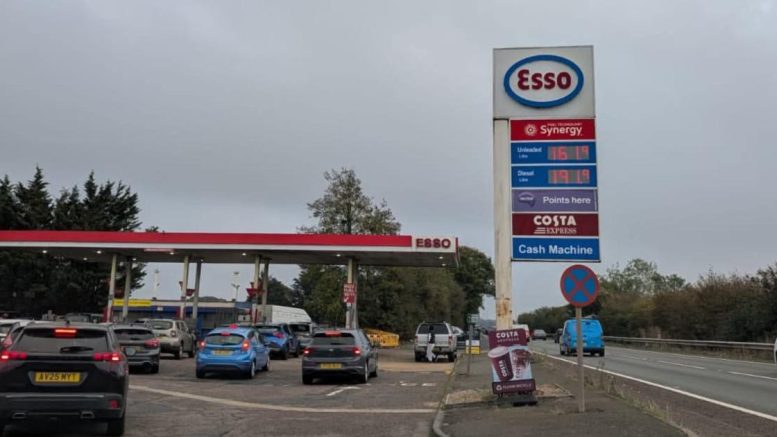

The warning comes as diesel prices hit a record high, with some UK forecourts now charging more than £2 per litre.
The average price has reached 199.35p per litre, just above the previous peak seen in 2022 following Russia’s full-scale invasion of Ukraine.
The government’s National Emergency Plan for Fuel includes the possibility of speed restrictions to help reduce consumption.
Prime minister Andy Burnham said the government is considering “every possible measure” to bring costs down.
Former BP executive Nick Butler warned that “restraints” on diesel use could become necessary.
Mr Butler said: “Yes. If there’s a shortage, and if you have to protect key sectors, then there’s less for everyone else.
“I think it would be unfair to do it on just rationing by price, so that only those who can afford the higher prices get it.”
It is understood that the government is not currently considering imposing fuel rationing or speed restriction measures — but the National Emergency Plan for Fuel remains in place as an active contingency for responding to major fuel supply disruptions.
The RAC has warned that filling an average family car now costs nearly £110, up by £31 since the start of the US-Iran conflict in February.
Diesel prices have risen by 59p per litre—around 40 per cent—since then.
The Middle East conflict and Iran’s blockade of the Strait of Hormuz have disrupted oil production and shipping, driving up costs.
The impact could be wide-reaching, with 70 per cent of local buses and nearly 99 per cent of HGVs running on diesel.
In June this year, there were still around 10 million diesel cars on British roads.